Keeping your brand consistent across distributed teams, agencies, and regional offices requires more than good intentions. When your team’s tools are disconnected, brand drift follows. Logos get used in the wrong format, outdated templates circulate for months, and compliance reviews bottleneck in cluttered email threads.
Brand management software solves this exact problem by giving every stakeholder a single source of truth for approved brand assets, guidelines, and templates.
This guide compares six brand management platforms through the lens of compliance enforcement, guideline distribution, template controls, integrations, and usability for distributed teams. If you manage brand consistency across multiple offices or markets, these tools are worth evaluating.
Quick guide: 6 best brand management software for brand compliance
- Brandworkz: The best brand management software for enforcing compliance across distributed teams with integrated DAM, guidelines, templates, and approval workflows in one platform.
- Frontify: A guideline-focused platform with modular content blocks for organising brand standards and DAM capabilities.
- Bynder: An enterprise DAM with AI-powered compliance checking and creative automation for multi-region asset distribution.
- Marq: A template-first platform with lockable design elements that enable non-designers to create on-brand marketing materials.
- Canto: A digital asset management system with AI-driven search, approval workflows, and brand studio for template creation.
- Adobe Experience Manager: An enterprise content management system with governance agents and digital rights management for large-scale brand operations.
How we chose the best brand management software for compliance
Finding the right platform means looking beyond feature lists. You need to know how each tool handles real-world compliance challenges, from enforcing guidelines across regional offices to maintaining audit trails for regulated industries. Here is what we evaluated:
- Compliance enforcement: Can the platform flag off-brand assets before they go live, and does it offer automated checks that catch violations early?
- Guideline management: Does the software provide interactive, always-current brand guidelines that update in real time across your entire organisation?
- Template controls: Can you lock critical brand elements like logos and colours while still giving local teams the flexibility to personalise content?
- Approval workflows: Does the platform route assets through structured review stages with full audit trails and deadline alerts?
- MarTech integration: How well does the platform connect to the design tools, CMS platforms, and CRM systems your team already relies on?
- Distributed team usability: Can teams across different regions, time zones, and skill levels access and use the platform without extensive training?
The 6 best brand management software for brand compliance
1. Brandworkz: Best overall brand management software for brand compliance
Brandworkz gives you a unified platform that combines digital asset management, brand guidelines, dynamic templates, and approval workflows in one connected system. Instead of juggling separate tools for asset storage, compliance reviews, and content creation, your team works from a single source of truth where every asset is approved, current, and easy to find.
The platform was built specifically to address the operational breakdowns that cause brand inconsistency. When assets, guidelines, and workflows live together, teams stop asking “is this the right logo?” and start producing on-brand content faster. Brandworkz was the first brand management software vendor globally to achieve ISO 27001 certification, which means your brand assets are protected by enterprise-grade security that has been independently audited.
Brandworkz also connects directly to your existing MarTech stack, including Adobe Creative Cloud, Microsoft Office, and CRM platforms. Your designers access approved assets without leaving Photoshop. Your regional teams create localised materials using dynamic templates. Your compliance officers track every approval decision through a recorded audit trail.
Brandworkz features
- Integrated brand guidelines: Editable guidelines live inside the platform alongside your assets, so teams always reference the current standards when creating content.
- AI-powered compliance checks: AI integrations flag out-of-compliance assets before public release, preventing brand violations rather than catching them after the damage is done.
- Dynamic templates: Pre-approved templates with locked brand elements let non-designers create customised, on-brand materials for digital and print formats in minutes.
- Automated approval workflows: Multi-stage review processes route content to the right approvers, record every decision, and send deadline reminders to keep projects moving.
- Role-based permissions: Granular access controls determine who can view, edit, download, and share assets, protecting sensitive materials while keeping teams productive.
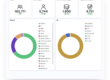
- Real-time reporting: Customisable dashboards track asset usage, template interactions, and compliance metrics so you can identify which assets perform and where brand standards need reinforcement.
2. Frontify: A guideline-centred platform with modular brand portals
Frontify organises brand guidelines using modular content blocks, which lets you structure everything from logo usage to messaging rules in customisable sections. The platform also includes a DAM for storing and distributing assets, along with template tools for creating on-brand content.
For teams that prioritise guideline creation and distribution, Frontify offers a visual approach to building brand portals. Each team, region, or partner can access a tailored hub managed centrally. The platform also includes analytics to track how guidelines and assets are being used across your organisation.
Frontify features
- Modular guideline builder: Content blocks let you organise brand standards including logos, colours, and messaging into customisable, easy-to-navigate sections.
- Customised brand portals: Create dedicated hubs for different teams, regions, or external partners, all managed from a central admin view.
- Template creation: On-brand templates help distributed teams produce content that follows brand rules without requiring design expertise.
3. Bynder: An enterprise DAM with AI compliance agents
Bynder provides a digital asset management platform with features designed for enterprise teams managing large asset libraries. The platform includes brand portals, scalable taxonomies, and granular permissions for controlling access across regions and departments.
Bynder recently introduced a Brand Compliance Agent that validates assets against brand guidelines and regulations. This AI-driven tool checks uploaded content for issues like incorrect logo placement, off-brand colours, and regulatory non-compliance. The agent operates within the DAM, providing automated feedback when assets are uploaded.
Bynder features
- Brand Compliance Agent: An AI tool that checks assets against brand and regulatory guidelines, flagging non-compliant content during the upload process.
- Creative automation: Lockable templates allow teams to personalise on-brand materials at scale without requiring design support.
- Digital rights management: Track usage rights and expiration dates for licensed content across your asset library.
4. Marq: A template-first platform with lockable brand elements
Marq focuses on solving the “last-mile” challenge of brand execution. The platform provides lockable templates where brand managers control which design elements can and cannot be edited. Non-designers across franchise, field, or partner marketing roles then personalise content within those controlled boundaries.
The platform also includes a Brand Guardian feature, an AI-powered tool that checks projects against brand guidelines for issues with colours, typography, and logo usage. Marq supports multi-brand environments and offers data merge capabilities for creating personalised content at scale.
Marq features
- Lockable templates: Control which elements of a design can be edited, ensuring brand standards are maintained while allowing localisation.
- Brand Guardian: An AI compliance checker that analyses projects against your brand guidelines and provides feedback on potential violations.
- Data merge: Dynamic fields pull data from spreadsheets or CRM systems to generate personalised, on-brand materials in bulk.
5. Canto: An AI-powered DAM with brand studio capabilities
Canto provides a digital asset management platform with AI features embedded into search, metadata tagging, and workflow automation. The platform supports visual search using natural language, facial recognition for people-focused assets, and duplicate detection to keep libraries organised.
Canto XI, the current generation of the platform, adds a Brand Studio for creating on-brand content from templates, along with an Approval Hub for managing review processes. The platform also includes Media Publisher for distributing content across channels directly from the DAM.
Canto features
- AI visual search: Find assets using natural language descriptions rather than relying solely on manual tags and keywords.
- Brand Studio: Create on-brand content from approved templates within the DAM, supporting consistent content production.
- Approval Hub: Route assets through review and feedback cycles with annotation tools and version tracking.
6. Adobe Experience Manager: An enterprise CMS with governance agents
Adobe Experience Manager (AEM) Assets provides digital asset management as part of Adobe’s broader experience management ecosystem. The platform includes governance agents that validate content against brand guidelines, permissions and digital rights management features, and AI-powered tools for scaling content production.
AEM’s Governance Agent checks content against pre-ingested brand rules covering tone, claims, logo usage, and typography. The agent operates in real time within editors and in batch mode for larger libraries. For organisations already invested in the Adobe ecosystem, AEM offers deep integrations with Creative Cloud and other Adobe products.
Adobe Experience Manager features
- Governance Agent: Validates content against brand guidelines in real time, covering logo usage, colour palettes, messaging standards, and regulatory requirements.
- Digital rights management: Centralises and classifies usage rights across asset categories, with automated alerts for expiring content.
- AI content scaling: Built-in AI tools help teams create content variations while maintaining brand standards through automated guardrails.
What makes brand compliance fail in distributed teams?
Brand compliance breaks down when the infrastructure supporting it is fragmented. Distributed teams operating across different offices, time zones, and markets often lack access to a centralised set of approved assets and current guidelines. The result is predictable: regional teams create their own versions of materials, outdated logos end up in client-facing presentations, and inconsistent messaging erodes customer trust over time.
According to research published by the IPA and System1, brands with the highest creative consistency scores produce advertising with significantly higher long-term brand-building potential. The same study found that consistent brands saw measurable gains in market share and profitability compared to their less consistent counterparts.
The structural fix is giving every team member access to the same approved assets, templates, and guidelines from one location. Brandworkz addresses this by combining document management, brand guidelines, and compliance workflows in a single platform. With the right system, on-brand behaviour becomes the default, not the exception.
How do you measure the ROI of brand management software?
Measuring the return on investment of brand management software starts with tracking the operational time your team currently loses to asset searches, manual approvals, and rework caused by off-brand content. Many organisations underestimate these hidden costs because they span multiple teams and workflows.
Start by measuring time to market for new marketing materials before and after adopting the platform. Track how many approval cycles each asset requires, and monitor the volume of off-brand content flagged during compliance reviews. These metrics give you a concrete baseline for calculating efficiency gains.
Brandworkz reporting and analytics provide visibility into asset usage patterns, download activity, and template interactions. This data helps you identify which assets drive the most value and where brand standards need reinforcement, turning your brand management investment into a measurable operational advantage.
Why Brandworkz is the best brand management software for compliance
Brand compliance at scale requires more than a library of approved files. It requires a system that connects guidelines, assets, templates, and workflows so on-brand behaviour happens by design. Brandworkz delivers this by unifying every element of brand management in one platform, giving your team a single source of truth that removes the guesswork from brand compliance.
What sets Brandworkz apart is the depth of its compliance controls. AI integrations flag non-compliant assets before they reach customers. Automated approval workflows maintain a full audit trail of every review decision. Dynamic templates protect brand elements while giving distributed teams the freedom to localise content quickly. And real-time reporting tracks compliance metrics so you can identify issues before they become patterns.
For enterprise brand managers and mid-market marketing teams managing multiple offices, markets, or brands, Brandworkz provides the governance infrastructure that turns brand standards into consistent daily practice. One platform. One source of truth. Every team creating with confidence.
FAQs about brand management software for compliance
What is brand management software used for?
Brand management software helps you centralise approved assets, enforce brand guidelines, and streamline content creation across your organisation. Brandworkz combines digital asset management with integrated guidelines, templates, and approval workflows so every team works from the same source of truth.
How does brand management software enforce compliance?
Compliance is enforced through locked templates, automated approval workflows, and AI-powered checks that flag violations before content goes live. Brandworkz includes AI integrations that identify out-of-compliance assets during review, preventing off-brand content from reaching customers.
Can brand management software support distributed teams?
Yes. Cloud-based platforms give global teams real-time access to approved assets and current guidelines from any location. Brandworkz provides role-based permissions, multi-language support, and dynamic templates that let regional offices create on-brand materials without constant oversight from the central brand team.
What industries benefit most from brand compliance software?
Financial services, healthcare, higher education, franchises, and consumer brands often have strict regulatory requirements that make centralised brand control a necessity. Brandworkz serves organisations across these sectors with configurable workflows and audit trail capabilities designed for compliance-sensitive environments.
How do you measure the success of brand management software?
Track time to market for new materials, the number of compliance violations caught during review, asset reuse rates, and the volume of off-brand content flagged over time. Brandworkz reporting and analytics provide these metrics through customisable dashboards that connect platform activity to operational outcomes.